
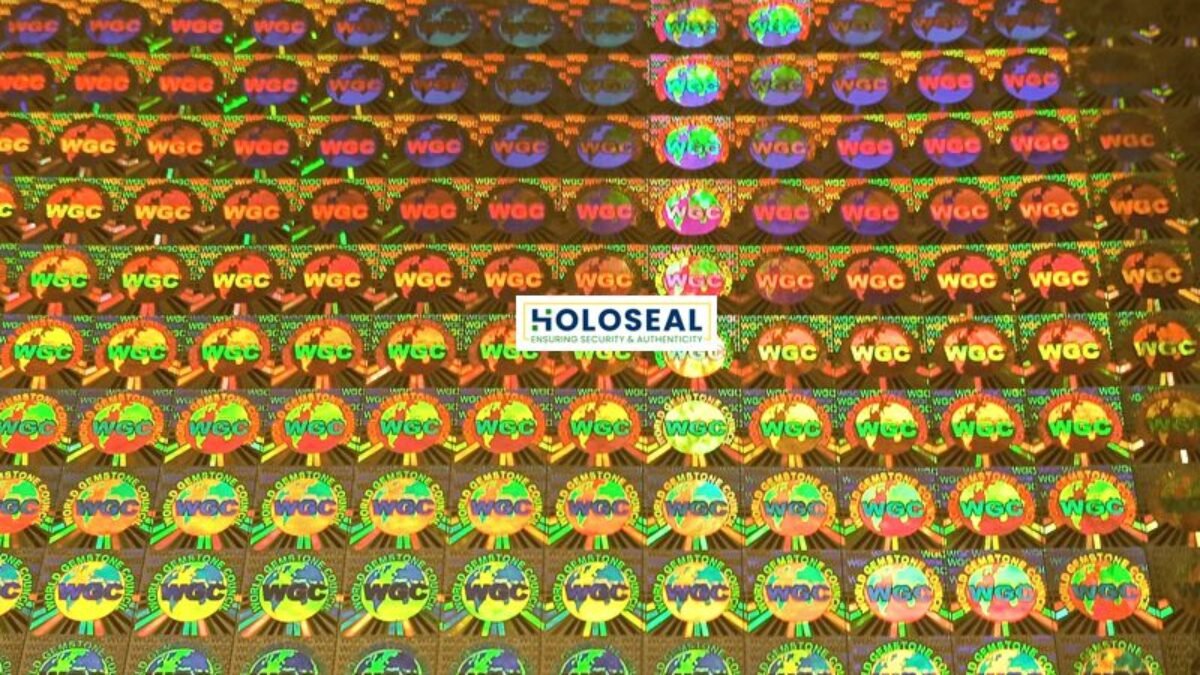
A security hologram is often mistaken for a simple shiny sticker. In reality, it is a meticulously engineered optical fortress. At Holoseal, we build not just labels, but multi-layered security events. Let’s dissect the anatomy of a truly tamper-proof hologram, moving from the visible surface down to its covert heart.
Layer 1: The Overt Facade – The Visual Deterrent
This is the visible, shifting image—the brand logo, kinetic animation, or dynamic rainbow. Its primary role is immediate recognition and aesthetic appeal. However, in a security context, this layer uses complex graphical patterns like guilloches (precise, intertwining lines) and microscopic kinematic movements that are exceptionally difficult to reproduce with standard printing, establishing the first barrier against casual counterfeiters.
Layer 2: The Destructible Bridge – The Tamper-Evident Core
Beneath the shiny surface lies the true guardian: a destructible film or laminate structure. This is where engineering becomes forensic. The hologram is bonded using a high-strength, yet brittle, adhesive system. Any peeling force triggers a controlled, irreversible failure. The holographic metallization cracks, or the film itself delaminates, often revealing a latent “VOID” or “OPENED” pattern on both the label and the substrate. This layer doesn’t just detect tampering; it loudly proclaims it.
Layer 3: The Covert Network – The Hidden Authentication
Here is where science meets secrecy. Embedded within the hologram’s optical structure are features invisible to the naked eye, verifiable only with specific tools:
- Microtext: Legible text as small as 50 microns, impossible to read or replicate without magnification.
- UV-Reactive Inks: Hidden images or codes that fluoresce under ultraviolet light.
- Laser-Readable Digital Fingerprints: A unique, randomized code etched at a nanoscale, readable only by a dedicated laser scanner. This acts as a unique digital signature for each batch or even each label.
Layer 4: The Foundational Code – The Digital Backbone
The final, most advanced layer exists in the digital realm. Each hologram can be linked to a secure serialization or QR code. When scanned, this code interacts with a cloud-based authentication platform, verifying the product’s legitimacy, location in the supply chain, and whether it has been authenticated before. This creates an immutable digital ledger, turning a physical label into a smart, connected security node.
Holoseal’s Synthesis: Integrated Intelligence
Our expertise lies in synthesizing these layers into a single, seamless security device. We don’t just stack features; we engineer them to interact. The overt pattern aligns with covert markers, while the destructible mechanism protects the digital identity. This multi-factor approach creates a hierarchical verification system—from instant visual checks by a consumer to forensic analysis by an inspector.
Understanding this anatomy reveals why a Holoseal hologram is a formidable defense. It’s a blend of optics, material science, and digital intelligence designed to protect, prove, and persist. It’s not a sticker; it’s a sentinel.
Engineer your product’s defense with layered intelligence. Explore our security solutions at www.holoseal.in.